
Freenow by Lyft - taxi & more
Intelligent Apps GmbHTravel & Local
4.52.37K Reviews
- Version
- Varies With Device
- Installs
- 10.00M
- Age Rating
- Everyone
Screenshots

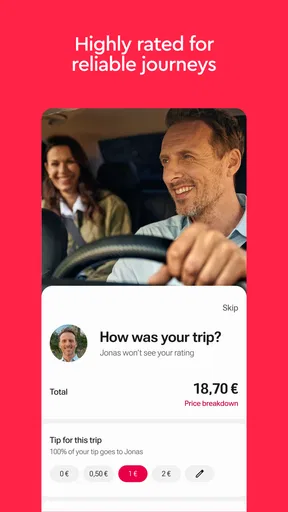

Our Review of Freenow by Lyft - taxi & more
 Analysis by Appyee
I use taxi apps when I need a ride to be predictable rather than improvised, especially after arriving somewhere unfamiliar or when public transport is no longer practical. Freenow fits that moment well: it is a free Travel & Local app from Intelligent Apps GmbH that brings taxi booking into one place on Android and iOS. Its purpose is straightforward, but the real question is whether that convenience is worth making it part of your travel routine.
My overall impression is positive. The app is most useful when I want to request a licensed taxi without standing on a street corner, calling a local dispatch number, or trying to explain my location over the phone. It is not a universal replacement for buses, trains, walking, or every local ride option, though. Its value depends heavily on whether the service is practical in the city I am visiting and whether the fare shown for a particular journey suits my budget.
How Freenow fits into everyday taxi travel
I find Freenow most useful when a taxi is the sensible choice but arranging one would otherwise add friction: after a late arrival, with bags in hand, or when I do not know the local taxi number. It gives me a place to start, while the actual choice still depends on coverage, timing, and the fare for that trip. That practical balance is the best way to judge where it belongs in an everyday travel routine.
A familiar booking process with a travel-first focus
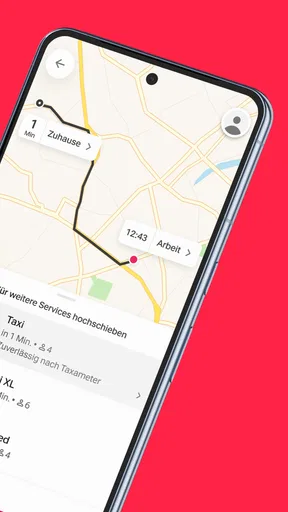
The strongest part of Freenow is the simple change it makes to a traditional taxi journey. Instead of searching for a company, finding a phone number, describing a pickup point, and waiting without much visibility, I can begin from a map-based booking flow. That is especially helpful at airports, railway stations, hotels, conference venues, and busy streets where identifying the correct curb is harder than expected.
I also like the way a dedicated taxi app changes the decision from “Can I find a cab?” to “Can I arrange the ride from here?” That distinction matters when I am carrying luggage or travelling with someone who has limited mobility. It can also reduce the awkwardness of asking a hotel receptionist or restaurant employee to make a call on my behalf.
The app’s store summary describes it as a way to book convenient, reliable, safe taxis wherever you are going. I would treat that as the intended experience rather than a guarantee that every pickup will be equally smooth. Traffic, demand, local taxi availability, road closures, and the exact pickup position still affect the result. The app can organize a request; it cannot remove the practical problems of city travel.
What the free price really means
Freenow is free to download and use as an app. That makes trying it low-risk, but free access should not be confused with free rides. The taxi journey itself is a separate travel expense, and the amount can vary with the route and local conditions. I would always check the fare information presented during booking and compare it with the alternatives available for that particular trip.
This distinction is important when deciding whether the app offers good value. The app saves time and reduces friction, but it does not automatically make a taxi inexpensive. If I am travelling a short distance on a well-connected public transport route, a bus or train may still be the better financial choice. If I am arriving late, carrying heavy bags, or sharing the ride, the convenience can justify the taxi cost more easily.
There is no purchase price for accessing the app itself, so the value calculation is mainly about convenience, availability, and the cost of each ride. I would not install it expecting a subscription benefit or a blanket discount. I would install it as a practical booking tool and then judge each journey on its own terms.
Why the service can feel safer than street-hailing
For me, the main confidence benefit comes from arranging a ride through a visible digital process rather than waving down an unknown vehicle. A booking creates a clearer connection between the request and the trip, which is reassuring when I am in an unfamiliar place or travelling at an inconvenient hour. It also helps me focus on the correct pickup point instead of scanning every passing taxi.
That does not mean I stop using ordinary travel awareness. I still check the vehicle and driver details shown in the app before getting in, confirm that the car matches the booking, and avoid sharing a pickup spot that is unsafe or difficult for a vehicle to reach. A taxi app is a useful layer of organization, not a substitute for sensible decisions.
Useful habits for smoother pickups
One of the less obvious lessons from using map-based taxi booking is that the pin matters as much as the address. A hotel entrance, a side road, and an airport pickup lane may all be close on the map but very different in practice. When I can, I choose a visible meeting point with room for a car to stop. That small step prevents the familiar situation where both passenger and driver are technically nearby but cannot see each other.
I also avoid requesting a ride while still walking through a large station or terminal. It is better to reach a stable pickup area first, because a moving passenger can make the original location outdated before the driver arrives. This is particularly useful when mobile reception, indoor maps, or crowded exits make positioning unreliable.
For airport and station trips, I allow more time than the app’s estimated journey alone suggests. Finding the correct exit, collecting luggage, and reaching the vehicle can take longer than the drive itself. Booking too early can create its own problem if I am not ready, while booking at the last second leaves little room for delays. The best workflow is to get oriented, identify the pickup zone, and then request the taxi.
Where Freenow is more convenient than calling a taxi
Calling a local taxi company can still be excellent when a hotel, restaurant, or office already has a trusted dispatcher. It may also be preferable when a passenger needs a very specific vehicle arrangement that is easier to explain verbally. However, a phone call can be uncomfortable for visitors who do not speak the local language confidently, and it gives less visual guidance about where to wait.
Freenow is more useful when I am managing the trip myself. I can start the request without finding a local number, and the map gives me a more direct way to communicate the pickup location. That makes the app particularly appealing for short visits, business travel, and spontaneous evening journeys.
Compared with simply hailing a taxi from the street, the advantage is preparation. I can arrange the ride before stepping outside, which is valuable in bad weather or when I am leaving a venue with luggage. The trade-off is that a street taxi may be faster if one is already waiting nearby, while an app booking still depends on a driver accepting and reaching the request.
Where public transport or another option wins
I would not use Freenow for every journey. In a city with frequent trains or buses, public transport is usually more economical and may be more dependable during heavy traffic. For a simple route between central neighborhoods, walking can be quicker than waiting for a car to navigate congested streets. A local taxi dispatcher may also be a better choice for planned group travel, unusual luggage, or a pickup that requires detailed instructions.
Ride-hailing alternatives can be more attractive in places where they have broader coverage or clearer upfront pricing. On the other hand, a conventional taxi booking app may be preferable to a general ride-hailing service when I specifically want a taxi rather than a private car option. The right choice depends on the city, the available vehicle supply, the route, and the fare shown at that moment.
Practical scenarios where the app earns its place
Imagine arriving at a railway station after a long day with a suitcase and a hotel several streets away. Instead of joining a queue or looking for a taxi rank, I can leave the station, select a clear pickup point, and arrange the ride while staying close to the entrance. If the location is crowded, I can use a landmark such as a hotel doorway or a designated curb rather than relying on a vague street address.
Another useful case is an early departure. I can prepare the destination and pickup details in advance, then request the taxi when I am actually ready to leave. That is less stressful than searching for a local number before sunrise, particularly when I am staying in an apartment or a neighborhood without an obvious taxi rank.
For work travel, the benefit is consistency. I do not need to ask a colleague to find a taxi or interrupt a meeting to arrange transport. I can handle the booking from the same app whether I am leaving an office, a hotel, or an event venue. The app becomes most valuable not because every ride is extraordinary, but because it removes small logistical tasks from a busy day.
Limitations I would consider before relying on it
The first limitation is local availability. A taxi app can be excellent in one destination and far less useful in another. Before making it my only transport plan, I would check whether Freenow operates meaningfully where I am going and whether the pickup areas I need are served. Installing it is easy; depending on it without a backup is a different decision.
The second limitation is that digital convenience does not guarantee a perfect pickup. A driver may have difficulty reaching a pedestrianized street, a large terminal, or a hotel with several entrances. Clear communication and a sensible meeting point remain important. If I am in a hurry, I avoid assuming that a nearby vehicle on the map will reach me immediately.
The third limitation is cost uncertainty from the passenger’s perspective. The app itself is free, but the ride is not, and a taxi can be poor value for a short or heavily congested journey. I use the price information available before confirming and compare it with public transport when time allows. That habit keeps the app from turning convenience into an automatic spending decision.
There is also a personal preference issue. Some travellers enjoy arranging everything through an app; others prefer the direct reassurance of a dispatcher or a taxi rank. Freenow will not change that preference for everyone. Its appeal is strongest for people who want a self-service booking process and are comfortable checking details on a phone.
Who will get the most value from it?
I think Freenow is a strong fit for tourists, frequent city travellers, business visitors, and anyone who dislikes negotiating the practical details of a taxi pickup. It is particularly helpful for people who arrive in unfamiliar places, do not speak the local language comfortably, or want to avoid standing outside while searching for a vehicle.
It can also suit households that occasionally need a taxi but do not want to maintain several local taxi numbers. Because the app is free, keeping it installed costs little in practical terms, and it is available when an unexpected journey appears. The value comes from having a ready-made booking route rather than from paying for a premium membership.
I would be more cautious recommending it to someone who mainly uses public transport, lives in an area with limited taxi coverage, or needs the lowest possible fare on every trip. Those users may gain more from a transit planner, a local taxi company, or another service with better coverage in their specific area. The app is also not the right sole plan for a complex group transfer unless the available booking options clearly match the passenger and luggage requirements.
Reputation, access, and the overall experience
Freenow has been available since October 27, 2010, and its scale suggests that it is not a niche experiment. The app has more than ten million installs, an average rating of 4.5 from around 333 thousand ratings, and roughly 2.4 thousand written reviews. Those figures provide useful context: many people have tried it, and the overall response is strong, while individual experiences can still vary by city and journey.
It is rated for Everyone, which fits the straightforward travel-booking purpose. I still think adults should help younger passengers make sensible decisions about pickup points and vehicle identification, especially when travelling in an unfamiliar area. An age rating describes the app’s general content, not every real-world travel situation.
In daily use, I see the app as a layer between planning and transport. It is not a travel guide, a replacement for a transit network, or a promise that every taxi request will be immediate. Its job is narrower and more useful: help me arrange a taxi with less uncertainty than an improvised street search.
My buy-or-skip verdict
Because Freenow is free to access, I would recommend trying it if taxis are part of your travel routine. There is no app purchase to justify, and the potential benefit is clear: faster organization, easier pickup planning, and less dependence on local phone calls. I would keep it as one option rather than treating it as the only transport app on my phone.
My practical recommendation is to install it before a trip, check local coverage, and use it selectively. Compare the displayed ride cost with public transport, choose a precise pickup point, and leave enough time for the driver to reach a busy location. Those habits make a bigger difference than simply having the app installed.
Skip it if your city has little Freenow coverage, if you almost never take taxis, or if a local dispatcher already gives you a more reliable service. For everyone else, especially travellers who value a calmer and more organized taxi experience, it is a sensible free tool. I would not call it a replacement for every alternative, but I would gladly recommend Freenow to a friend who wants a straightforward way to arrange a taxi without turning each ride into a small logistical project.
Verdict
Strengths of Freenow by Lyft - taxi & more
- Book taxis, private cars, and other rides from one app.
- Live driver tracking makes pickup progress easy to follow.
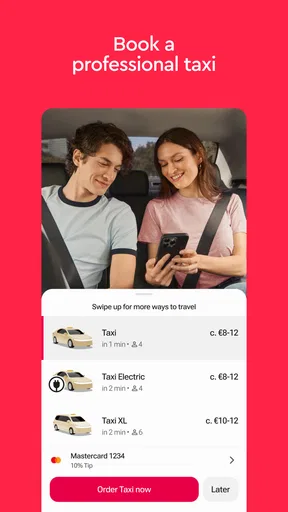
- Upfront fare estimates help avoid surprises before confirming.
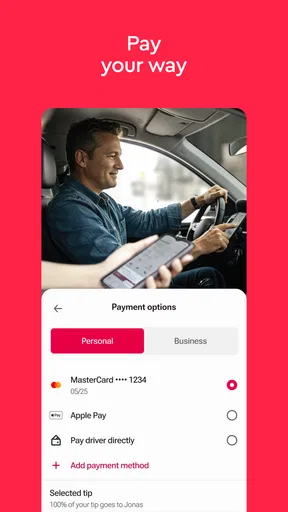
- Multiple payment methods, including in-app card payments.
- Available in several European cities with localized services.
Limitations of Freenow by Lyft - taxi & more
- Coverage and vehicle options vary considerably by city.
- Prices can rise during busy periods or high-demand events.
- Driver availability may be limited outside central areas.
- Some features require location access and other permissions.
- Cancellation fees may apply after a driver accepts the trip.
Similar Picks in This Category
View All
Google Maps
Google LLC3.4

Google Maps Go
Google LLC4.1

Booking.com: Hotels & Travel
Booking.com Hotels & Vacation Rentals4.8

Google Earth
Google LLC3.8

Skyscanner Flights Hotels Cars
Skyscanner Ltd4.8

trivago: Compare hotel prices
trivago N.V.4.4
Frequently Asked Questions
What is Freenow by Lyft, and what services does it offer?
Freenow by Lyft is a mobility app that lets users request taxis and, depending on their city, access additional transportation options such as private-hire vehicles, car sharing, scooters, or bikes. The exact services vary by location, so the app checks your selected city and displays the available choices. It is mainly designed to make booking, tracking, and paying for urban journeys from one place easier.
How do I book a taxi with Freenow by Lyft?
After creating an account and allowing location access, enter your destination in the app and choose the available taxi or ride option. You can review the estimated price, pickup details, and payment method before confirming. The app then shows the driver’s information and vehicle details, followed by live tracking on the map. In some locations, advance bookings may also be available.
How much does Freenow by Lyft cost, and can the price change?
The fare depends on factors such as your city, distance, travel time, local taxi regulations, booking fees, and the selected service. The app may provide an estimate before you confirm, but the final amount can differ when the journey is metered or circumstances change. Additional charges may apply for waiting time, tolls, airport fees, cancellations, or other local surcharges.
What payment methods are supported in Freenow by Lyft?
Freenow by Lyft generally allows users to pay through a payment card or other digital payment methods supported in their region. In some cities, cash payment may also be available when booking a traditional taxi, although this depends on local rules and the driver or service selected. Before confirming a ride, check the displayed payment option and make sure your account details are current.
Is Freenow by Lyft safe to use, and what should I do if there is a problem?
The app provides useful safety and support features, including driver and vehicle details, trip tracking, booking records, and in-app assistance. Before entering the vehicle, compare the license plate and driver information with what appears in the app. If a ride is canceled, charged incorrectly, delayed, or involves a safety concern, use the trip’s help section to contact support and report the issue promptly.
